
Why we refuse to analyze your idea sometimes.
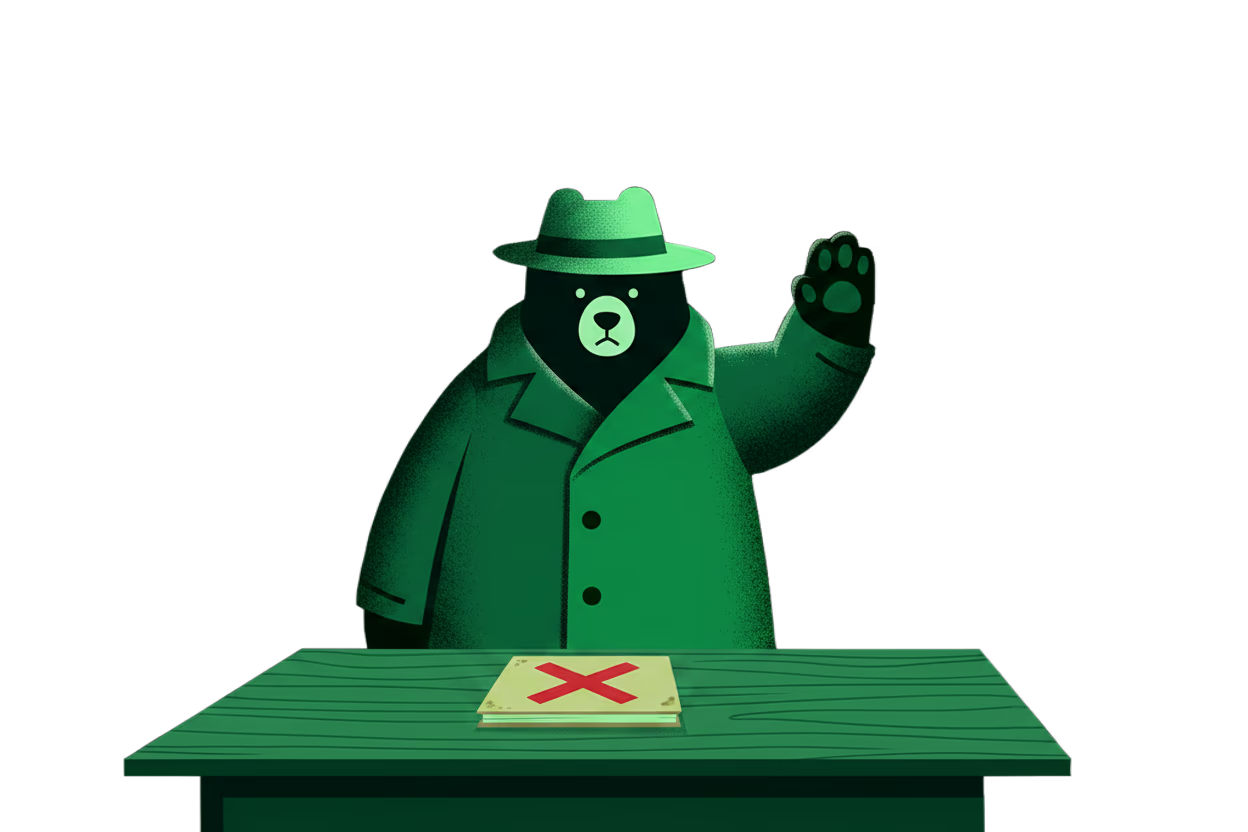
title: "Why we refuse to analyze your idea sometimes" description: "Most research tools hand you a confident verdict on anything. We built a preflight check that says no on purpose. Three salvage angles beats one fake verdict." ogTitle: "Why we refuse some ideas." ogDescription: "Most research tools hand you a confident verdict on anything. We say no on purpose. Three salvage angles beat one fake verdict." heading: "Why we refuse to analyze your idea sometimes." publishedAt: "2026-05-20" updatedAt: "2026-05-20" author: "Andrés" authorTitle: "Co founder, The Detective" teaser: "Most research tools say yes to everything. Type in something illegal, get a confident revenue projection. We built a preflight check that says no on purpose, and three salvage angles beats one fake verdict every time." readingMinutes: 6 heroImage: "/field-notes-refuse.avif" heroAlt: "A detective bear behind a desk with one paw raised in a firm stop gesture, a folder marked with a red X in front of him" draft: false
We built a research tool that says no.
That is the sentence I keep coming back to when I describe what The Detective does, because it is the part that confuses people the most. The expectation, when you point an AI at a niche research problem, is that the machine will dutifully produce a report. Type something in, get a verdict out. Confidence in, confidence out. The whole category trained users on that contract.
We broke the contract on purpose.
Before any analysis runs, we run a preflight check. Cheap queries against the public web, an honest look at whether there is enough primary source material to ground a verdict, and a hard kill list of categories we will not touch under any circumstances. The check is over in seconds. The output is binary. Either we proceed, or we refuse the spend, return three salvage angles you could try instead, and tell you why the original framing failed.
The first time we showed this to a friend in the space, he laughed and asked why on earth we would advertise the refusal. Most products hide their failure modes. We put ours in the preflight gate, in the marketing copy, on the About page, in the terms. Because the alternative, in our category, is fraud.
What the kill list actually contains.
Six categories, named in plain text: insurance, medical advice, legal advice, financial advice, tax preparation, and construction lien work. They share two features. The first is regulated. The second is that being wrong about them, in public, in writing, with an AI generated verdict attached, could ruin someone's life. Not in the dramatic sense. In the slow, paperwork sense. A founder who builds into one of those categories without the licensing structure already in place is going to end up in front of a regulator they did not expect to meet, defending a product they did not realize required defending.
We are not equipped to render a verdict on whether your tax preparation idea will work. Nobody at our scale is. The honest answer is that you need a lawyer, you need someone who has shipped into that vertical before, and you need a year of patient compliance work that no research tool, however thorough, can shortcut for you.
So we refuse. Not as a marketing position. As an operational constraint coded into the preflight pass.
The second refusal, the quieter one.
The hard kill list is the obvious refusal. The harder one is the groundability gate. When the preflight runs and the evidence on your specific niche is thin, when the public web does not contain enough primary signal to anchor a real deep dive, we shut the deep dive down before it spends a dollar.
This is the refusal that costs us money. A customer pays twelve ninety nine for a Starter report expecting a verdict. We tell them, instead, that we cannot ground a verdict, and we offer them a credit and three alternate framings they could try. The economic temptation in that moment is obvious. Ship something. Anything. The customer paid; render a report. Hedge the verdict if you must. Use words like preliminary and emerging and adjacent. Most of the category does exactly this.
Three salvage angles is a better thing to deliver than one fake verdict. That is not a marketing line. It is the only durable position we found.
We do not hedge. We refuse, return the credit, and route the customer to the salvage set. The math says we lose a small number of dollars per refusal. The math also says we lose a customer permanently the first time they realize the confident report we shipped them was built on three forum posts and a Wikipedia stub. The second loss is worse.
What the salvage angles look like.
When we refuse, the response is not empty. It is three adjacent framings of the customer's original brief, each with a one paragraph explanation of why the framing might ground better than the original. A medical advice niche becomes a workflow tool for the medical practice. A legal niche becomes a document automation play for a non lawyer user. A tax niche becomes a CRM for tax preparers, which is a different product sold to a different person.
Most of the time the salvage angles do not turn into the customer's next analysis. They turn into a conversation the customer has with themselves about what they were actually trying to build. Which is, honestly, the more useful outcome.
Why the discipline holds.
My co founder and I have day jobs. The Detective is built on evenings and weekends. There is no investor pressure to ship verdicts we do not believe in, no growth team chasing weekly active users, no enterprise pipeline that requires fudged confidence to keep the dashboard green. The constraint, by accident, is the right one. We can afford to refuse, because refusing costs us nothing we cannot earn back.
Eventually we will have to scale this. The refusal logic will face pressure from customers who do not want to hear no, from a board that does not exist yet, from the temptation to hedge instead of refuse. I hope we remember this post when that pressure arrives.
The bar is the bar. If we cannot ground it, we do not ship it. And the founder who came to us with the ungroundable niche walks away with three angles they had not considered, instead of a report they should not trust.